So, one last preview/set of predictions to come and I’ve left it for last for two reasons. Firstly, it’s the last event to start competition. And secondly, because it is the sport I know least about. In fact, I would say that I know literally nothing about it. Sorry wrestling fans! Still, my predictions wouldn’t be complete without them, so here they are. Treat these with not so much a grain of salt as an entire mine of it.
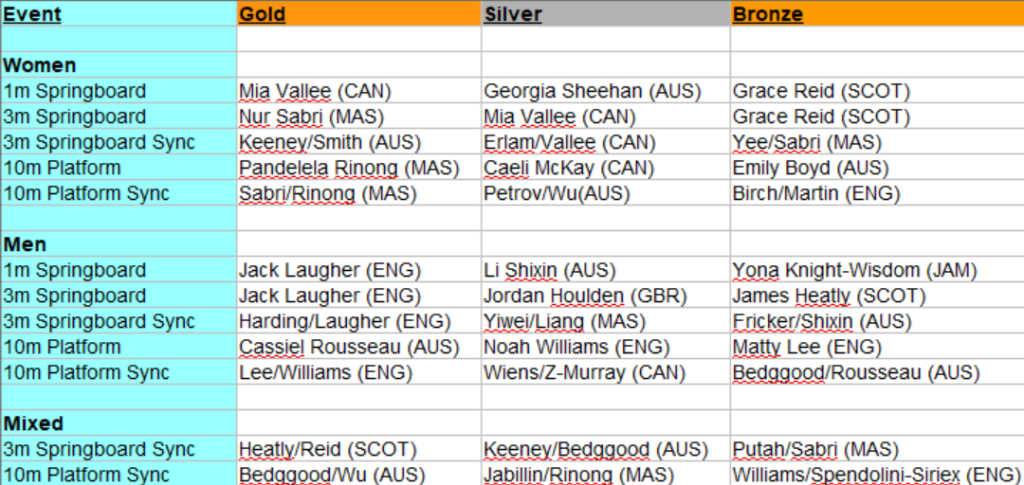
There are just 2 sports yet to start their program at these Commonwealth Games. One is wrestling – which gets underway tomorrow – and the other, as you may have guessed by the title of this post, is diving.
The battle to top the overall medal table is still alive and England will hope that diving is one sport where they could claw back a few golds on Australia, as they have excellent hopes of a bunch of gold medals. Not least they will be hoping that Jack Laugher has remembered quite how much he loves competing at the Commonwealth Games. He’s competed in six total events over the last two editions and has come away with six medals, five of them gold.
Two countries that will hope to spoil the party for the Ashes nations are Malaysia and Canada, who both have realistic chances of several medals themselves, especially on the women’s side.
Look out as well for Yona Knight-Wisdom of Jamaica, who in 2016 became the first Carribean male diver to ever compete at the Olympics. Should he win a medal, the home nation might try to claim at least a part of it, as he was born in Leeds and has trained with Jack Laugher!
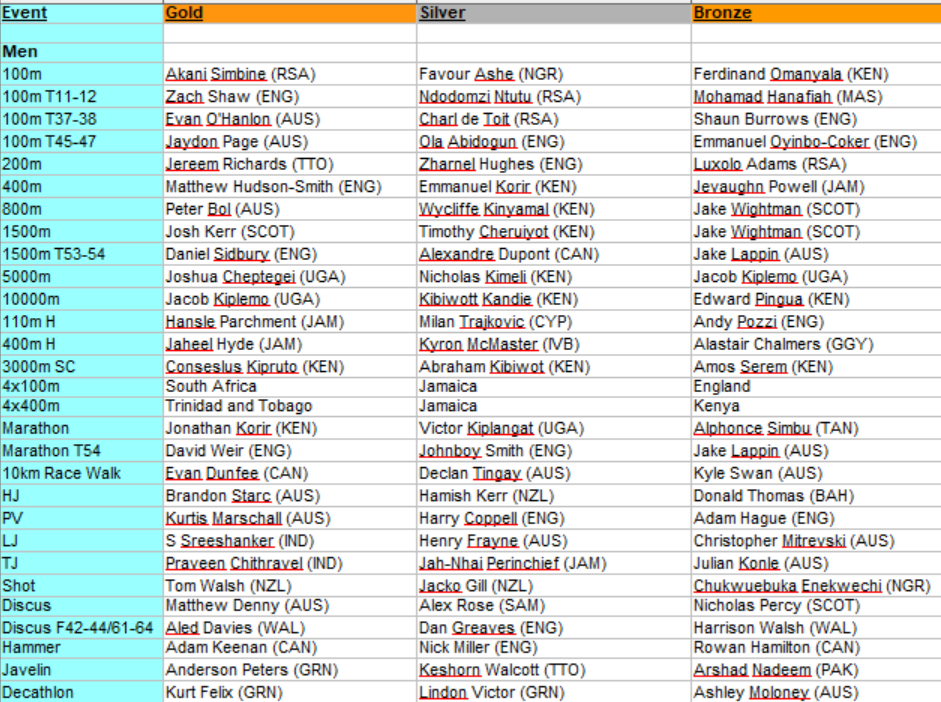
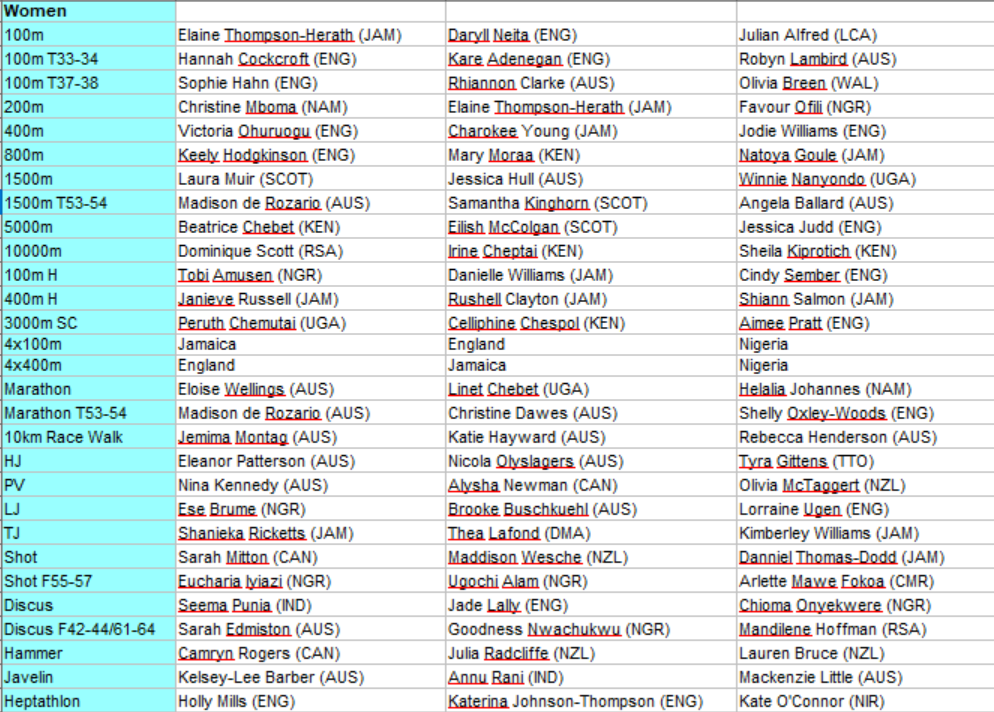
Athletics – along with swimming – is one of the core sports at the Commonwealth Games. Indeed, recent changes to the structure of future game have said that those two sports are the only two sports that hosts are required to offer – all other sports can be tailored to the choice of the host venue with agreement of the Commonwealth Games Federation.
Given the importance of athletics therefore, it is a shame that this edition will not necessarily see as many of the top athletes available as it could have. The decision of World Athletics to have the re-arranged World Championships finish only 10 days before the athletic program started here has meant a sizeable number of withdrawals – whether by choice to manage their workload or by injury – depriving us of the chance to see the likes of Kirani James, Shelly-Ann Fraser-Pryce, Shericka Jackson, Dina Asher-Smith, Neeraj Chopra and many others. It’s a shame that better planning could not have gone into planning the calendar to avoid this clash.
Despite these absences, there will still be plenty of world class athletes showing up in Birmingham. On the track on the men’s side Akani Simbine looks to defend his 100m crown, whilst the 1500m final is likely to feature many of the protagonists of the World and Olympic finals, including the Scottish pair of Josh Kerr and newly-minted World Champion Jake Wightman. In the field, expect fireworks in the Javelin from the likes of Anderson Peters and Keshorn Walcott, as well as Tom Walsh in the Shot and Sreeshanker in the Long Jump.
On the women’s side, we may be missing the World Champion in the 100m, but we do have the (double) Olympic Champion in Elaine Thompson-Herath, as well as the new World Record Holder in the 100m hurdles in Nigeria’s Tobi Amusen. As on the men’s sides expect some high class races in the middle distances, with the likes of Mary Moraa, Keely Hodgkinson and Laura Muir all entering these championships carrying world medals won at those games.
In the field, expect a strong showing from Australia, who will fancy their chances of High Jump medals through Eleanor Patterson and Nicola Olyslagers, as well as in the Javelin from Kelsey-Lee Barber and the Pole Vault from Nina Kennedy. England would normally have considered their chances of Pole Vault glory to be high with Olympic medallist Holly Bradshaw but she enters these championships having had something of an injury hit year, much similar to that of former Heptathlon World Champion Katerina Johnson-Thompson. Still, it would be foolish to write either of them off entirely.
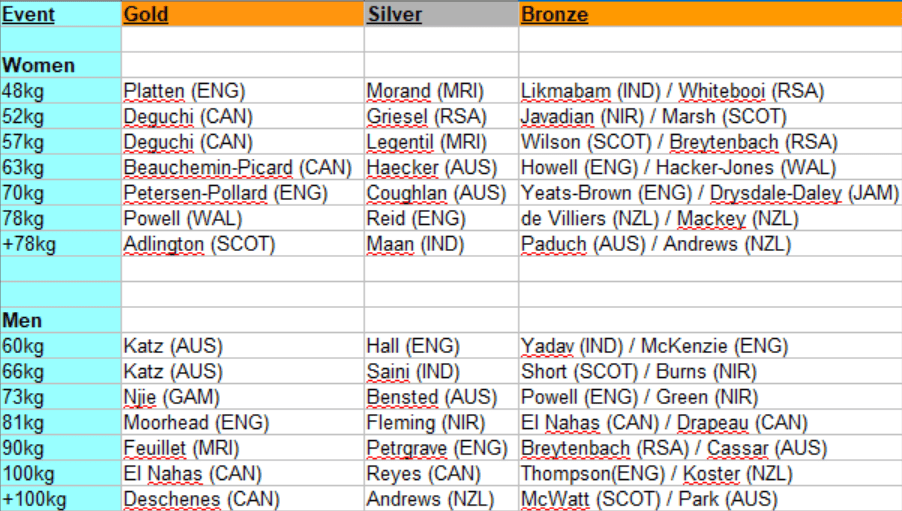
Judo has an interesting history in the Commonwealths. Despite being an Olympic sport since the 1960s (the Commonwealth programme, whilst not being exactly the same tends to be similar to the Olympic programme), it only became an official Commonwealth sport in at the Auckland Games in 1990 and since that time has only been held when the Games have been held in the UK.
Given that fact, the overall Commonwealth medal table in the discipline is unsurprisingly dominated by England and Scotland, who have won 36 of the 44 gold medals contested in it. Both nations will hope to continue that trend at these gams. Be on the look out as well for three sets of siblings that will each be hoping for gold – the Deguchi sisters and El Nahas brothers (from Canada) and the Katz brothers from Australia all have realistic chances of taking the top step of the podium in their respective weight classes.
And yes, I know the competition started this morning. I was asleep and didn’t get around to posting this in time (it’s still very early in the US, where I live). I promise I haven’t cheated and looked at the early results though!
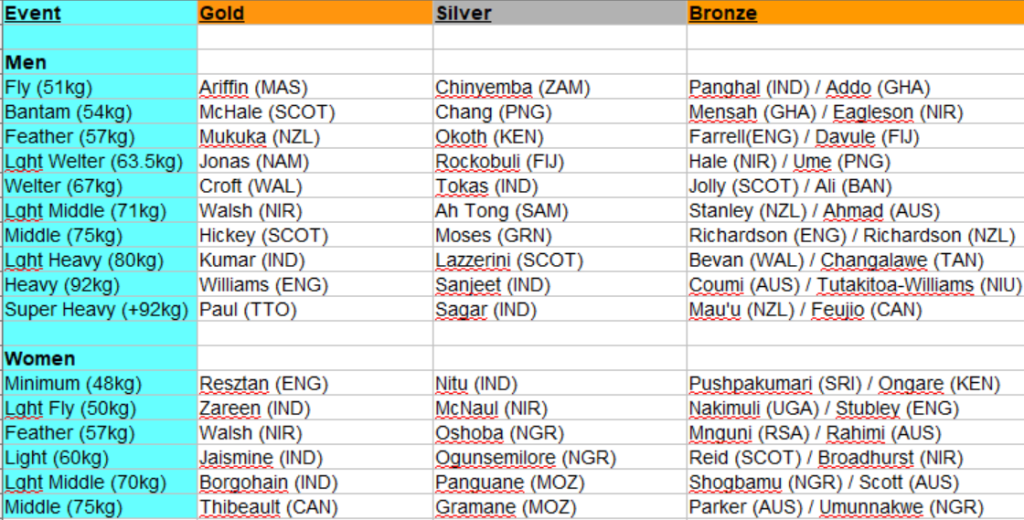
There are three plausible reasons why I’m doing a joint preview of boxing and lawn bowls.
The first is that I noticed – when looking at past Games – that these two sports are the two in which Northern Ireland has most regularly won medals and I thought that was an interesting fact.
The second is the fact that both sports are amongst the 7 sports contested at the first Commonwealth Games in 1930 (then known as the British Empire Games). Indeed, boxing is an ever present and bowls has missed only one edition of the Games (1966).
The final reason is that both sports begin with the letter ‘B’.
I’ll let you decide which is most likely reader. Ahem.
Anyway, joking aside, the first of those facts is absolutely true and, especially in the case of boxing, I would expect that to continue here. Northern Ireland has a fabulous boxing pedigree and enters the Games with several realistic gold medal chances, not least of which are the brother and sister combination of Aidan and Michela Walsh. Elsewhere, expect India to be strong contenders for overall topping of the boxing medal table.
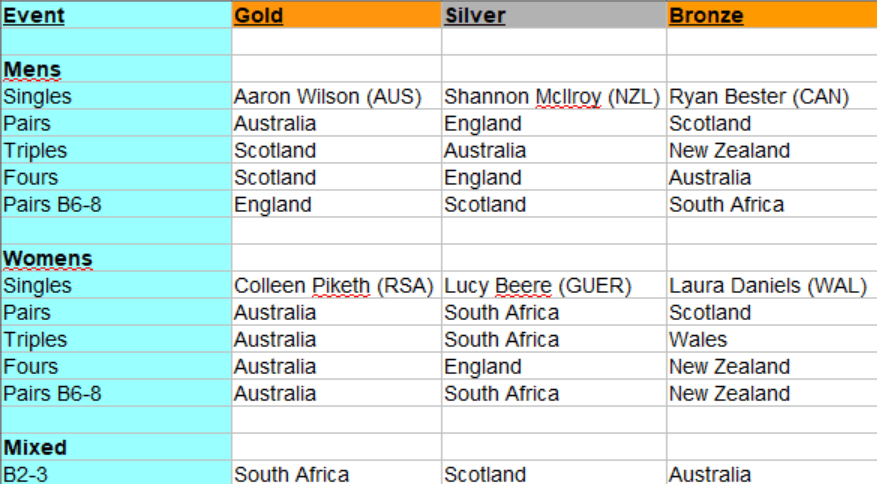
And so onto bowls. As well as Northern Ireland’s previously mentioned strong history here, this sport also has often favoured some of the smaller nations at the Games. Jersey have medalled in previous games and just 4 years ago Malta, the Cook Islands and Norfolk Island all came away with a bronze. Expect the unexpected in bowls! That being said, Australia enter as favourites to win a bucket load of medals.
A day off from predictions tomorrow, before Judo and Athletics on Monday, with Diving and Wrestling following later in the week as we get closer to the start of those sports’ programme.
Which are Badminton, Squash and Table Tennis, if you were wondering. And yes, I know some people say it that the thing you use in table tennis is a paddle. But I don’t subscribe to that position, so there. It’s a bat. Also, cricket is not included in bat sports; it was in the team sports preview. Those are the rules that…I just made up.
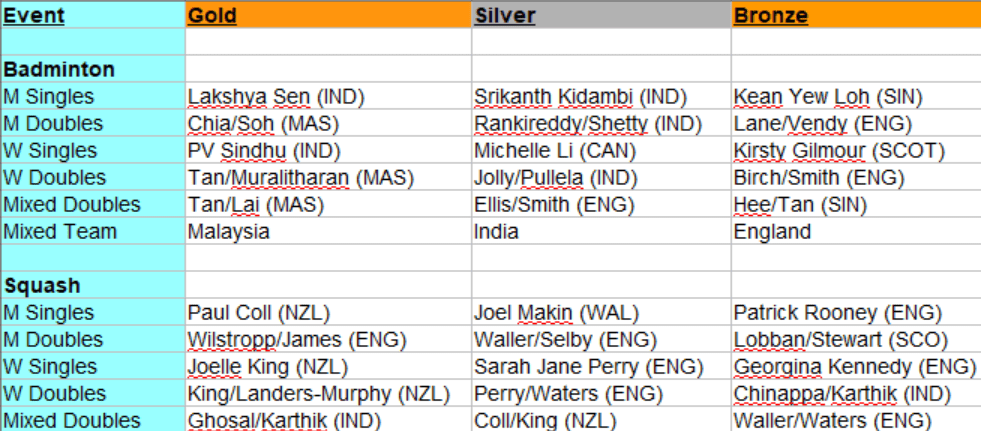
Anyway, onto the sports themselves. Badminton should be something of a battle royal between Malaysia and India, who could easily split all the gold medals between them. On the women’s side, PV Sindhu is a sporting icon in India. It was reported a couple of years ago that her marketing endorsements earned her an amount that was second only to Vihrat Kolhi, India’s cricket captain at the time, which should give you an idea of her popularity. And she backs that popularity up with her performance on the court – a world champion with multiple medals at the Olympics. She’ll be hoping to earn a gold medal here in the women’s singles, which would complete the set of Commonwealth medals for her following bronze in Glasgow and silver on the Gold Coast.
A few years ago, Malaysia would also have been in the running for being the top nation in squash as well, with the imperious Nicol David leading the charge. Now, that position is probably filled by New Zealand, who enter these games boasting the number 1 seeds on both the men’s and women’s sides, in Paul Coll and Joelle King. Look for the pair to also team up in a formindable mixed double team as well. The prospect for a good showing by the home nations also remains, with England, Scotland and Wales all having realistic medal shots in the event.
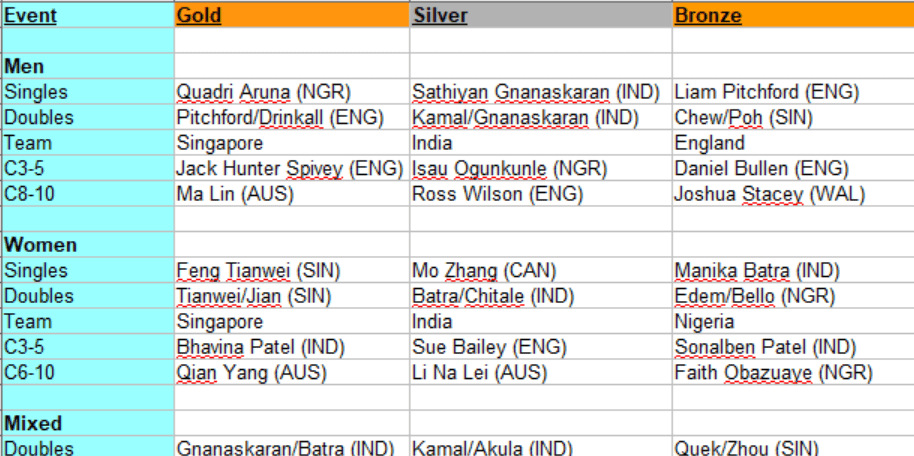
Finally, we have table tennis. Singapore have usually been the dominant force in this event, led by the multi-medal winning Gao Ning, who boasts 9 Commonwealth medals over the last 3 editions of the Games). Led by the great Feng Tianwei they will still be favourites to win several medals but perhaps not as overwhelming favourites as in previous years. Expect India to do well here also, and don’t overlook the prospects of Nigeria who have a rich tradition in this event, especially at the Commonwealth Games.
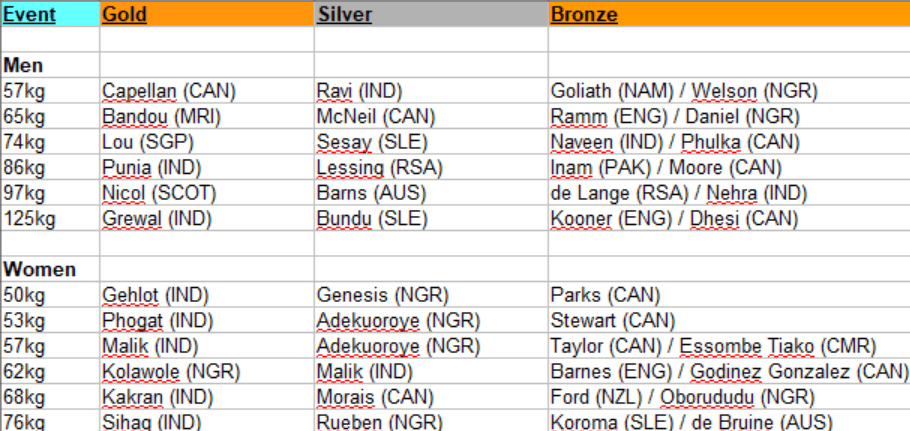
Weightlifting has been a mainstay of the Commonwealth Games since the 1950s and never fails to provide drama. Since 2002, para powerlifting has also joined the Games – initially under the weightlifting banner but recently as a discipline in its own right.
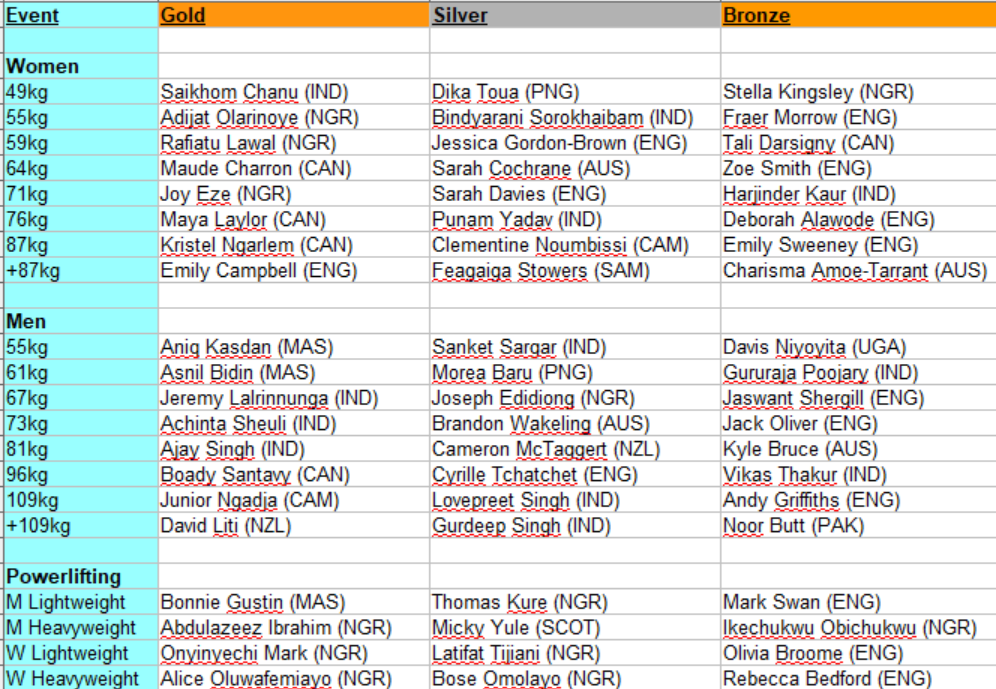
Recent editions of the sports at the Games have been dominated by India and Nigeria and it would not be surprising to see those two nations perform strongly again here. Indeed, the large Indian population of the Birmingham area could motivate athletes from that country to even greater heights than normal, so hopefully we could see some outstanding weights lifted! Look out for Saikhom Chanu in the women’s 49kg catagory in that regard.
Outside of those two countries, we have Maude Charron of Canada, who not only will be defending her Commonwealth title but comes into the Games as the reigning Olympic champion as well.
In terms of home nation interest, we should look no further than Emily Campbell, who became Britain’s first female medalist ever at the Olympics last summer, and was one of England’s flag bearers at the opening ceremony on Thursday. Finally, we can all be inspired by the journey of Cyrille Tchatchet. Originally from Cameroon, he actually competed in Glasgow in 2014. He subsequently claimed asylum in the UK, competed at Tokyo for the Refugee Olympic Team and has been cleared this year to compete for England. Quite the journey.
In terms of the para powerlifting, the last Games were dominated by Nigeria and I expect these to be the same, although look out for Bonnie Gustin of Malaysia to potentially prevent a Nigerian clean sweep of gold medals.
No rest of the wicked (or, at least, no rest for those who want to get as many of their predictions out there before the competition gets too far in and people start to think that I’ve made them after the event! I promise that’s not the case, I’m just a slow typer so catching up with the blog posts takes longer than it should!
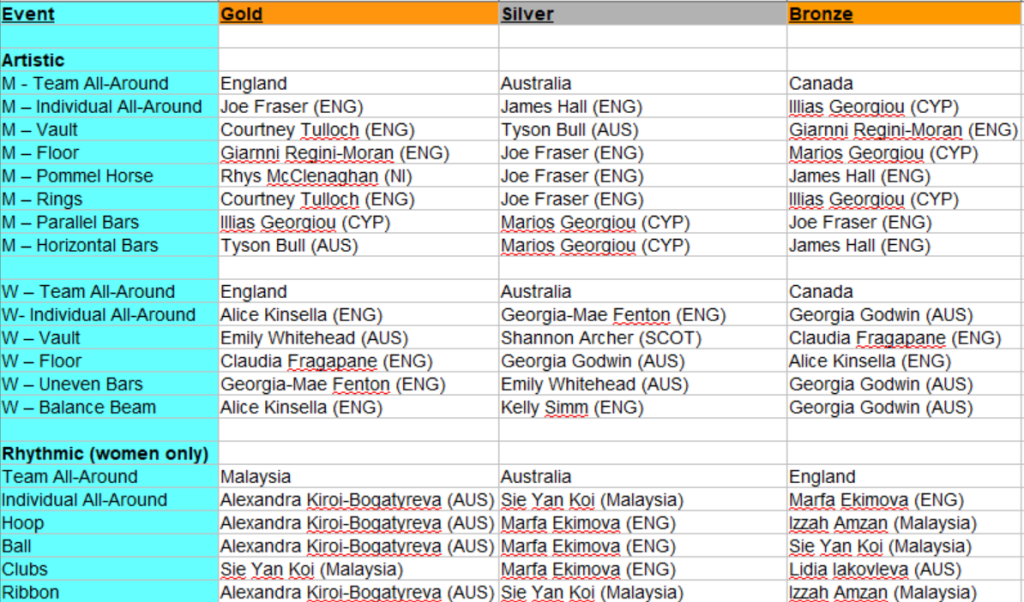
Recently Commonwealth Games have seen England top the Artistic Gymnastics medals table, and the same could well happen here, even with the likes of Max Whitlock or the Downie sisters. England still have many medal chances, including the return to the Commonwealth Games of Claudia Fragapane, who took 4 golds in Glasgow but has suffered a serious of injuries since then.
Other countries still have serious medal chances. On the men’s side, look out for the Georgious from Cyprus – Ilias and Marios (who will look to defend the floor and parrallel bars titles he won in 2018). Australia and Canada will always be dangerous although Canada’s team is without some of their very top stars, such as Ellie Black.
In regards to the Rhythmic Gymnastics, I have a confession to make – I know almost nothing about the sport. A cynical person would say that’s probably true of most of my predictions. To them, I say pffft. But with Rhythmic Gymnastics, it is certainly true. So take those predictions with a huge grain of salt. If I get them right, it’ll be more luck than judgement!
It’s the T’s! Team sports and Triathlon (which don’t really have much else in common with each other, I just wanted to get the Triathlon predictions out as soon as possible as the individual event for that sport are happening today on Day 1 of the Games!
As with the 2018 Games, the individual events are held over the “sprint” distance, which is half the length of the Olympic distance. This means the competitors do a 750m swim, 20km bike ride and finish with a 5km run. Although the vast majority of athletes taking part are comfortable at both distances, the shorter sprint events seem to have a tendancy to be slightly more unpredictable.
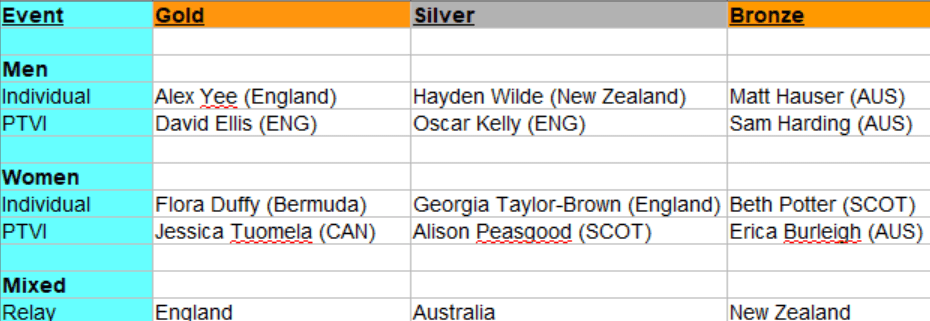
That said, on the women’s side, there is an overwhelming favourite – the incomperable Flora Duffy of Bermuda, who is not only defending her Commonwealth crown but is also the reigning Olympic champion. On the men’s side Alex Yee (England) and Hayden Wilde (New Zealand) have been having a running battle this season and expect that to continue.
Triathlon is also one of the sports with para events, which this year are for visually impaired triathletes.
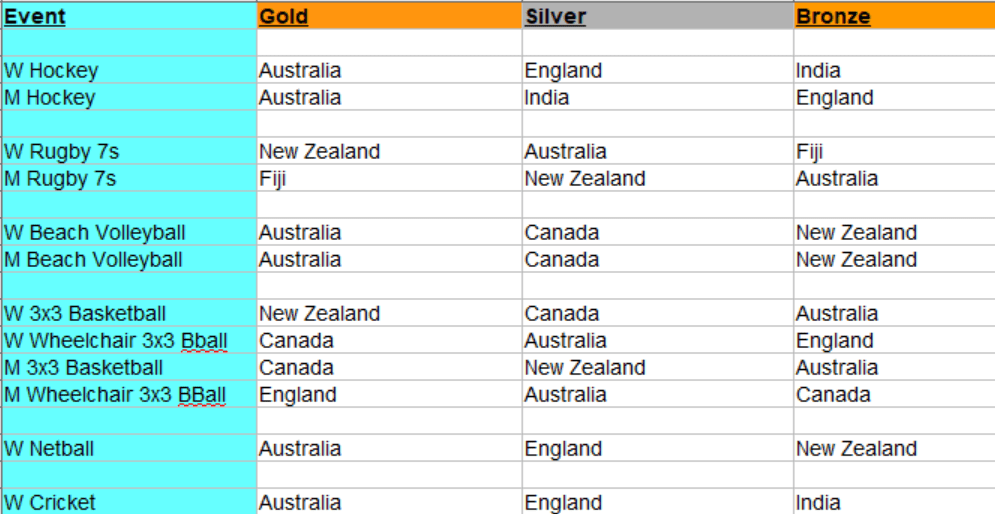
In the team sports, expect the traditional strong performances from the ANZAC nations. In particular, look for Australia’s netball team to be super motivated to regain their crown, after England dethroned them on home soil last time out.
2022 also brings us women’s T20 cricket for the first time, as well as 3×3 basketball. Australia start as favourites in the cricket but England and India, amongst others will fancy their chances of claiming gold. Meanwhile Canada will hope to do well in the basketball.
Finally, expect Fiji, as ever, to be amongst the top nations in the rugby 7s.
Next up in my preview/predictions is one of my favourite sports – cycling. I’m just about recovered from the chaos that was the Tour de France this year (and am currently enjoying the equal chaos that is the first Tour de France Femmes that is currently happening) and the Games should be equally exciting.
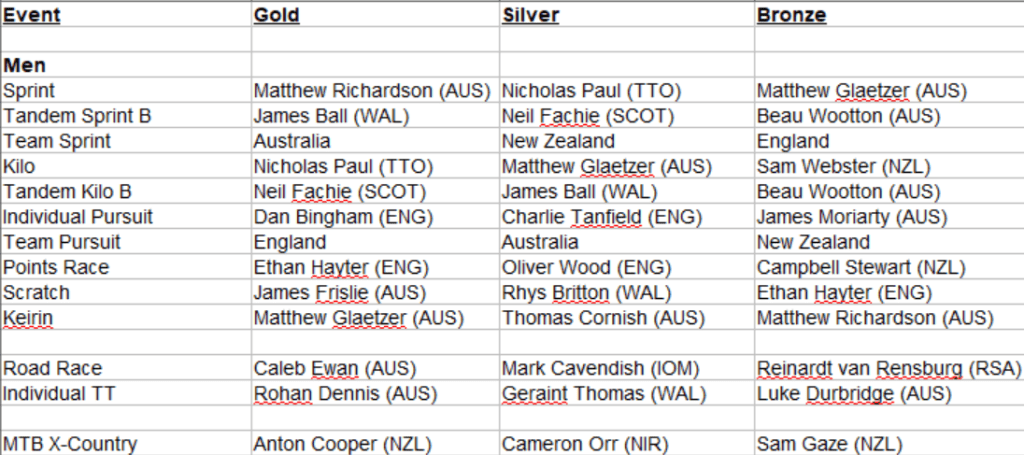
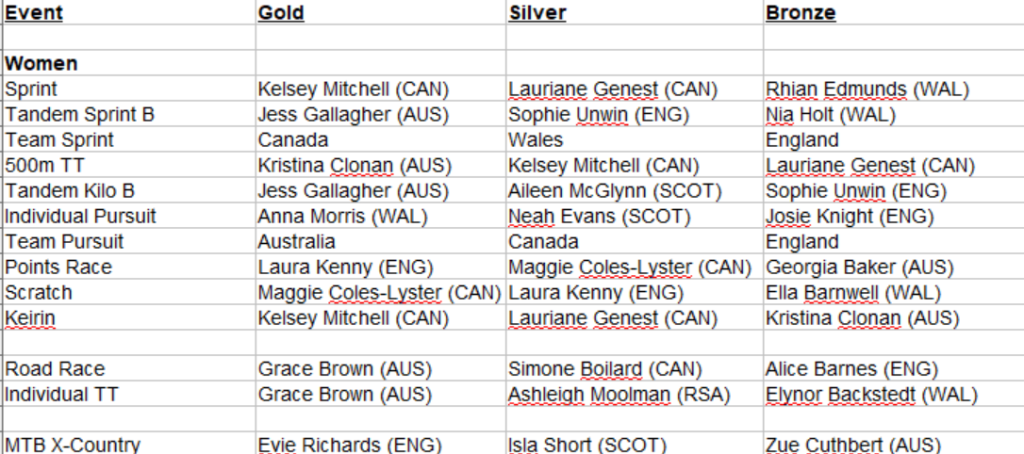
As anyone who knows me will attest, I often describe cycling as one of the more unpredictable sports out there, especially when talking about road cycling. Between riders constantly battling the conditions (both road and weather), the ever present attempts for groups to escape and the vagaries of form, the road races are notoriously difficult to predict. The course this year looks like it should favour sprinters, rather than climbers, so the likes of Caleb Ewan and Mark Cavendish will hope to be in the mix. But don’t underestimate riders making a solo break and staying away. That happens much more often in these races, where the control that the professional peleton can assert simply does not exist. Look at the women’s road race in Tokyo last summer for a perfect example of that.
On the track – which is taking place in London, as the organisers declined to build a velodrome in the Birmingham area specifically for the games – look for some new stars to shine, including Nicholas Paul (Trinidad and Tobago) who has been gradually improving season on season, although he will have the wily veteran Matt Glaezter of Australia amongst his foes.
Whilst one knighted Kenny (Sir Jason) has retired, we still have the other (Dame Laura) competing here in the team pursuit, scratch and points race.
Finally, we shouldn’t forget the mountain biking, wheren Anton Cooper (winner at Glasgow 2014) and Sam Gaze (winner on the Gold Coast in 2018) of New Zealand will hope to continue their battle for Commonwealth dominance.
 Ian's World Of Sports